


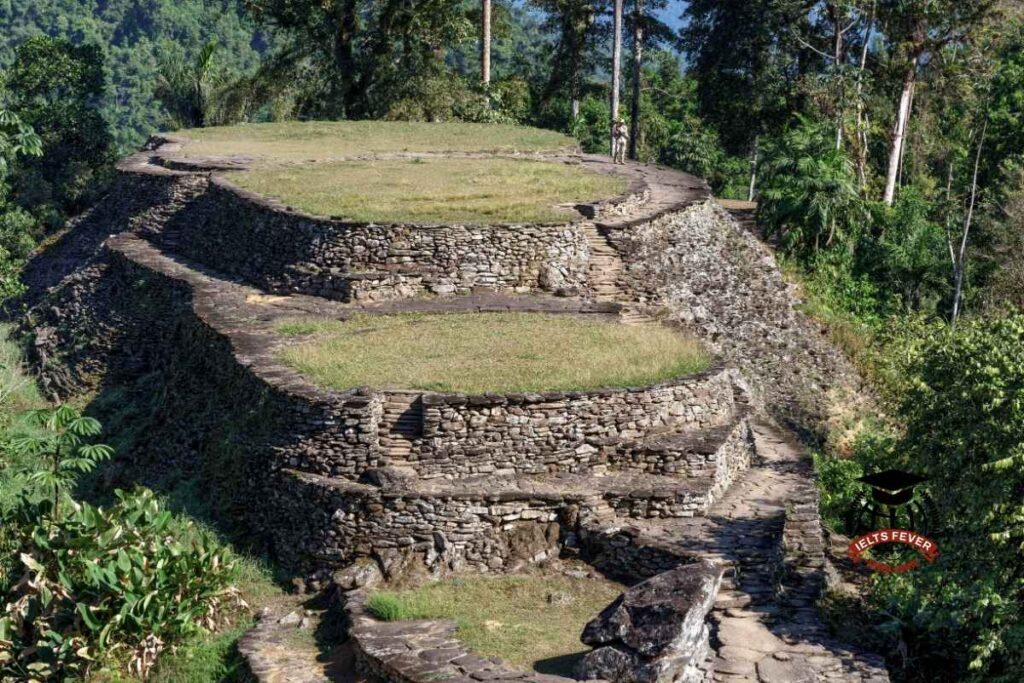
IELTSFever Computer Based Academic Reading Test 1 is a full 40-question practice session built around three very different academic texts. The first passage develops an argument about carbon levels and possible responses. The second explains how technology helps archaeologists investigate a ruined city. The final passage follows the history, study and survival challenges of right whales.
That combination is valuable because it tests several reading behaviours in one hour. You must follow an argument, separate similar technical processes, locate ideas across many paragraphs and complete connected summaries with exact words. On a computer, you must also manage scrolling and answer fields without losing your place.
This original guide prepares you for the test without copying its passages or publishing the answers. It introduces a Question Cluster Method, a fresh approach that organises the paper by the kind of search each question demands.
Open IELTSFever Computer Based Academic Reading Test 1
IELTSFever Computer Based Academic Reading Test 1 at a Glance
| Feature | What you will practise |
|---|---|
| Delivery | Computer-based Academic Reading |
| Recommended limit | 60 minutes |
| Passages | 3 |
| Questions | 40 |
| Passage 1 topic | Carbon figures, risk and possible action |
| Passage 2 topic | A lost city and archaeological survey methods |
| Passage 3 topic | Right whales, research and environmental danger |
| Question families | Summary completion, True/False/Not Given, paragraph matching and multiple choice |
| Best review point | After the complete timed attempt |
Prepare the session as if it were an important mock test. Use a reliable computer, enlarge the browser only if you genuinely need it and remove avoidable notifications. Keep rough paper nearby for practice notes, but do not turn it into a copy of the passage.
A quiet setup matters. Pausing repeatedly to answer messages can make a difficult test feel easier because your brain receives extra recovery time. One uninterrupted attempt gives a more honest picture of your pace.
Why Academic Reading Test 1 Is a Strong Starting Test
Academic Reading Test 1 begins with a passage that contains a clear argumentative direction, but the questions demand precise distinctions between figures and claims. The middle passage introduces scientific vocabulary in an accessible context. The last passage is longer and asks you to navigate many labelled paragraphs.
The difficulty does not rise in a perfectly straight line. Questions 1–8 may look simple because the gaps follow a summary, yet several nearby numbers have different functions. In Passage 2, the technical terms are less important than understanding what each investigation method does. Passage 3 requires a reliable paragraph map because matching prompts do not need to follow text order.
The test is therefore a useful baseline. Your errors can reveal whether you struggle most with sequential evidence, paraphrased statements, paragraph purpose, grammar around a gap or screen navigation.
Verified Question Layout for Academic Reading Test 1
The current practice page follows this structure:
Passage 1: Questions 1–13
Questions 1–8 complete a summary linked to the Carbon’s New Math Reading Passage. Questions 9–13 are True/False/Not Given statements.
Passage 2 Covers Questions 14 to 26
The first three items in this section, 14–16, require a paragraph letter from The Lost City IELTS Reading. Item 17 is another location decision focused on a reason. The eight gaps from 18 through 25 form a technical summary, while the section closes with one four-option question.
Passage 3: Questions 27–40
Questions 27–32 match information with paragraphs from Right Whales IELTS Reading. Questions 33–40 complete a connected account about research and one individual animal.
Across the whole test, 24 questions are completion items. That makes word choice, grammatical fit and answer limits especially important. However, the non-completion questions can consume more time if you do not map paragraph functions.
The Question Cluster Method
Instead of applying one routine to every question, divide the test into four clusters. Each cluster uses a different search movement.
| Cluster | Questions | Search movement | Main risk |
|---|---|---|---|
| Ordered gaps | 1–8, 18–25, 33–40 | move forward through a limited passage area | choosing a nearby word with the wrong function |
| Statement checks | 9–13 | compare a complete claim with evidence | confusing absence with contradiction |
| Paragraph discovery | 14–17, 27–32 | move across labelled paragraphs | matching topic instead of purpose |
| Whole-idea choice | 26 | test every option against the full explanation | accepting an exaggerated detail |
Before answering a set, identify its cluster. This small decision tells you whether to move forward, compare claims, scan paragraph roles or evaluate options.
The Question Cluster Method keeps IELTSFever Computer Based Academic Reading Test 1 efficient because it matches your search pattern to the task rather than forcing the same technique onto all forty questions.
Cluster One: Solving Ordered Gaps
Summary-completion questions usually follow the passage sequence. Use that advantage.
Start by reading the entire summary once. Decide whether it describes an argument, a process or a story. Then predict the grammatical form of every gap. Mark a simple code in your mind:
- N for a noun;
- V for a verb;
- Adj for an adjective;
- No. for a number;
- Name for a person or labelled subject;
- Date for a time reference.
Search for the first gap carefully. Once it is confirmed, continue from that evidence rather than returning to the top of the passage for every question. If a later answer seems to appear earlier, pause and check whether you skipped a sentence or selected the wrong evidence.
Never copy extra words for safety. Extra text can break the word limit or grammar. The ideal response is the shortest exact passage expression that completes the sentence.
Cluster Two: Checking Statements Precisely
True/False/Not Given is not a test of whether a statement sounds reasonable. It is a comparison between two meanings.
Break the statement into four possible parts:
- subject;
- action or claim;
- amount or degree;
- condition, time or comparison.
A True response needs the relevant parts to agree. A False response needs a clear conflict. Not Given applies when the passage does not provide enough evidence to confirm or reject the full claim.
Be suspicious of upgrades. The passage may say some, while the question says most. It may describe a possibility, while the question presents certainty. It may mention two groups without ranking their contribution. These changes are small in length but large in meaning.
Cluster Three: Finding the Right Paragraph
Paragraph-matching questions are easiest when each paragraph has a short label. Your label should describe its job, not merely its subject.
Weak label: technology
Better label: why technology was needed
Weak label: whales
Better label: how researchers identify individuals
The better label contains a relationship, purpose or change. That is what matching prompts normally target.
Read all prompts in the set before searching. Rare concepts—such as an unexpected discovery, a commercial change or a birth trend—are faster to locate than general ideas. Complete those first and then use elimination for the broader prompts.
Cluster Four: Choosing the Complete Idea
For multiple choice, turn every option into a yes-or-no claim. Ask whether the passage supports the complete wording.
An option can contain a correct noun and still reach the wrong conclusion. Watch for absolute promises such as completely replaces, reveals every detail or works in all conditions. If the passage gives a limitation, an absolute option is unlikely to survive.
Do not select the first familiar-looking choice. Evaluate all available options and eliminate them with evidence.
Carbon’s New Math Reading Passage: Create a Number Ledger
The Carbon’s New Math Reading Passage combines quantities with an argument about risk and action. A number is useful only when you remember what it measures.
Create a mental number ledger with two columns:
| Figure type | Question to ask |
|---|---|
| historical level | What earlier condition does it describe? |
| later measurement | At what stage was it recorded? |
| rate | Is it a yearly change or a total? |
| proposed boundary | Is it exact, estimated or recommended? |
| time span | What event is the period measured from? |
This prevents a common mistake: copying the nearest figure because it shares the right unit. A rate per year cannot replace a total level. A boundary cannot replace a past measurement.
While skimming, divide the passage into three broad movements: diagnosis, possible responses and willingness to change. This is enough structure for retrieval without memorising every example.
Carbon’s New Math Reading Passage Summary Questions
Questions 1–8 compress a long argument into a shorter chain. Read the connectors around each gap.
- However signals a change or contrast.
- From…to… requires two different points in a sequence.
- Considering the problem introduces responses.
- In other words restates an idea and can reveal the meaning of the missing phrase.
- Perhaps the most direct way signals one proposed measure rather than every solution.
Use grammar to reject tempting answers. If the sentence already contains a unit after the blank, enter only the figure when the instructions permit it. If the gap follows an article, look for a countable noun that fits naturally.
After completing the set, read the summary as one paragraph. It should move logically from earlier conditions to change, risk and response. A locally plausible answer may still be wrong if it damages that overall progression.
Truth Judgements in Carbon’s New Math Reading Passage
For Questions 9–13, underline the statement’s strongest component mentally. It may be a comparison, a level of certainty or a claim about people’s behaviour.
Use a certainty ladder:
| Lower certainty | Middle certainty | Higher certainty |
|---|---|---|
| may, could, suggests | likely, indicates | proves, guarantees, definitely |
Meanings on different steps are not automatically equivalent. Evidence that indicates a risk does not necessarily prove an exact outcome. Likewise, a comparison with an earlier project does not mean both efforts work in the same way.
The Carbon’s New Math Reading Passage rewards candidates who compare strength, not just topic. Keep outside opinions about climate policy out of the decision; only the displayed text counts.
The Lost City IELTS Reading: Follow the Investigation Route
The Lost City IELTS Reading presents an archaeological challenge and a series of responses. The site is too extensive for unrestricted digging, so researchers first gather broad information and then focus their physical work.
Follow the investigation route:
- recognise the site’s importance and scale;
- record surface patterns from above;
- examine what may lie beneath the ground;
- compare two underground survey approaches;
- choose promising places for excavation;
- test expectations through direct digging.
This route gives you a timeline and a purpose map at the same time. It helps distinguish a paragraph explaining why a method was introduced from one explaining how the method operates.
Paragraph Selection in The Lost City IELTS Reading
Questions 14–17 ask for paragraph locations. Use a two-part fingerprint for paragraphs A–G.
| Fingerprint part | Example of the information to record |
|---|---|
| role | background, problem, method, limitation or discovery |
| distinctive detail | view from above, magnetic effect, electrical resistance or excavation surprise |
When a prompt mentions a reason, search for cause language. When it requests an example, search for a specific event rather than a general explanation. When it asks about surface observation, do not settle for a paragraph centred on underground measurement.
Two paragraphs can share the word site or survey, but only one normally performs the required function. Confirm the relationship expressed in the prompt before entering its letter.
Handling Technical Vocabulary Without Guessing
The middle summary contains specialist-sounding terms, but the passage explains them through actions and contrasts. You can solve the questions even if the vocabulary is new.
Use three clues:
- definition clue: the text explains what a tool measures;
- cause clue: the text shows why a physical change appears;
- contrast clue: two materials or methods behave differently.
Draw a simple contrast card:
| Survey idea | What changes? | What influences the reading? | Main practical issue |
|---|---|---|---|
| Method A | a magnetic pattern | past heating and buried material | interpretation of signals |
| Method B | electrical resistance | material and ground condition | slower coverage |
These generic labels prevent accidental answer disclosure while helping you organise the explanation. Replace them mentally with the terms used on the test page.
For Questions 18–25, grammar remains decisive. Look at articles, prepositions, verb forms and singular–plural agreement before copying a technical expression. The Lost City IELTS Reading does not require you to become an archaeologist; it requires accurate reading.
The Lost City IELTS Reading Multiple-Choice Check
Question 26 asks about the practical value of the modern techniques. Think in terms of contribution and limitation.
The methods help researchers see patterns and decide where closer investigation is worthwhile. At the same time, they do not turn every buried detail into certain knowledge, and they do not make traditional excavation unnecessary.
When reviewing the options, reject any choice that overstates precision, removes the need for physical investigation or ignores a stated condition. Select only the option whose entire message fits the passage.
Right Whales IELTS Reading: Use a Paragraph Postcode
The Right Whales IELTS Reading passage has many labelled paragraphs. Give each one a “postcode” made of one letter and three or four words.
For example, your private map might identify paragraphs by functions such as:
- feeding observation;
- naming and early hunting;
- new commercial demand;
- migration and remaining population;
- individual identification records;
- survival of a young whale;
- health and entanglement;
- deaths and disappearances;
- rescue attempt;
- present habitat pressures;
- birth-rate pattern.
These are navigation notes, not answers. They reduce a long passage to an accessible index.
Build the postcodes during a quick first scan. Do not spend time polishing the wording. A useful label is one that immediately sends you back to the correct paragraph when a question mentions the same function.
Matching Information in Right Whales IELTS Reading
Questions 27–32 focus on six distinct ideas. Start with prompts containing a noticeable change or purpose. A “new commercial reason” is more distinctive than a general mention of hunting. A “method of telling animals apart” is narrower than a paragraph that simply describes research.
Use the noun-plus-change test:
- What is the main noun—route, birth rate, identification, profit, capture or habitat?
- What happens to it—changes, explains, distinguishes, increases risk or describes the present?
Both pieces must match. A paragraph can mention births without describing the requested change. It can mention a location without mapping a route.
Do not expect the six answers to follow question order. Right Whales IELTS Reading requires deliberate movement across its paragraph postcodes.
Completing the Final Right-Whale Narrative
Questions 33–40 summarise a connected sequence rather than separate facts. Preview the entire summary and identify its story stages:
- creation of a scientific record;
- attention to one known animal;
- later confirmation and description;
- signs of health;
- a dangerous encounter;
- an attempted response.
Because the events are connected, the evidence is concentrated in a smaller group of paragraphs. Once the first blank is located, continue through that part of the passage instead of rescanning from paragraph A.
Predict answer types carefully. A named individual cannot fill a gap requiring a date. An adjective describing condition cannot replace the object causing danger. A verb phrase must fit both tense and meaning.
Copy spelling directly from Right Whales IELTS Reading. Proper names, dates and multiword items are easy to damage when typed from memory.
IELTS Academic Reading Practice Online: Use Three Screen Zones
Effective IELTS Academic Reading Practice Online requires a controlled screen routine. Think of the page as three zones:
- question zone: the exact demand and answer limit;
- evidence zone: the smallest passage area that settles it;
- entry zone: the numbered field receiving the answer.
Before typing, move your eyes through those zones in that order. This reduces answers placed beside the wrong number.
Keep scrolling movements short. If you jump several screens, note the paragraph letter or distinctive phrase before moving. When you return, check the number at the top of the active question set.
Highlight sparingly. Mark a decisive contrast, figure or phrase. Highlighting whole sentences repeatedly produces visual noise and makes later review slower.
In IELTS Academic Reading Practice Online, typing accuracy is part of performance. A correctly located word can still be lost through a missing letter, unwanted plural or extra word.
A Practical 60-Minute Schedule
| Work block | Time | Target |
|---|---|---|
| Passage 1 | 16 minutes | build number ledger and judge statements |
| Passage 2 | 20 minutes | map investigation route and complete technical gaps |
| Passage 3 | 19 minutes | create paragraph postcodes and follow the final story |
| Whole-test check | 5 minutes | inspect limits, spelling, labels and empty fields |
This timing gives the technical middle passage more space and preserves enough time for the longer final text. Adjust by one or two minutes if necessary, but do not sacrifice the whole review period for one doubtful question.
At each checkpoint, move forward even if one answer remains uncertain. Enter the best evidence-based response, remember the number and revisit it during the final five minutes.
Final Review Routine for Academic Reading Test 1
Review Academic Reading Test 1 in passes rather than randomly.
Pass 1: Empty Fields
Scan question numbers 1–40 and fill any accidental blank.
Pass 2: Completion Format
Check the word limit, grammatical fit, spelling and singular–plural form for all summary answers.
Pass 3: Paragraph Letters
Confirm that letters for Questions 14–17 come from the Passage 2 range and those for Questions 27–32 belong to Passage 3.
Pass 4: Truth Labels
Recheck the strongest word in each statement and ensure you used the required True, False or Not Given label.
Pass 5: Screen Position
Look for a sequence in which answers may have shifted one field forward or backward.
Change an answer only when you can name the reason. Nervousness is not evidence.
Learn From Mistakes With Repair Cards
After submission, create one short Repair Card for each error pattern.
| Card field | What to record |
|---|---|
| Trigger | What kind of wording caused the error? |
| Wrong move | What did you do? |
| Evidence rule | What should have settled the answer? |
| Next action | What will you do on the next test? |
Example: Trigger—several figures in one paragraph; Wrong move—copied the closest number; Evidence rule—label rate and total separately; Next action—build a number ledger.
Open the solution only after finishing the timed session:
Review the official Academic Reading Test 1 solution
Return to the passage for every incorrect item. The purpose of the solution is to confirm evidence and improve your method, not to memorise an answer list.
IELTSFever Internal Resources for Further Study
Continue your preparation with these IELTSFever pages:
- Choose another set from 150+ Academic Reading practice tests.
- Find recent reading material in the Academic Reading archive.
- Convert your correct-answer total through the IELTS band score calculator.
- Add writing practice from the Academic Writing Task 1 section.
- Work on listening through the IELTS Listening practice collection.
- Access more tests at the IELTSFever CBT practice platform.
Select the next activity from your Repair Cards. If paragraph discovery caused most errors, practise another passage with labelled sections. If completion questions were weak, focus on grammar prediction and exact copying.
Frequently Asked Questions About Academic Reading Test 1
Question 1:- How many questions are in IELTSFever Computer Based Academic Reading Test 1?
The test has 40 questions divided across three academic passages. Set a 60-minute timer and protect five minutes for a final review.
Question 2:- Which passages appear in Academic Reading Test 1?
Academic Reading Test 1 contains a carbon-and-climate argument, an archaeological passage about a lost city and a longer text about right whales.
Question 3:- What question types appear in Carbon’s New Math Reading Passage?
The Carbon’s New Math Reading Passage contains summary completion followed by True/False/Not Given. Label every figure by its function and compare the certainty of each statement.
Question 4:- How can I solve The Lost City IELTS Reading efficiently?
For The Lost City IELTS Reading, follow the investigation route from broad observation to underground survey and selected excavation. Separate the purpose, operation and limitation of each method.
Question 5:- What is the best approach to Right Whales IELTS Reading?
Give every paragraph in Right Whales IELTS Reading a short postcode. Use those labels for matching, then follow the smaller narrative sequence for the final summary.
Question 6:- Why is IELTS Academic Reading Practice Online useful?
IELTS Academic Reading Practice Online combines reading skills with realistic scrolling, panel navigation, typing and answer-field control.
Question 7:- Should I use background knowledge about the passage topics?
No. Base every response on the text provided. Background knowledge can create assumptions that the passage never confirms.
Question 8:- Do summary answers always appear in order?
They normally follow the relevant passage sequence, but you must still confirm every blank through meaning, grammar and the stated word limit.
Question 9:- Is Not Given the same as False?
No. False requires contradictory evidence. Not Given means the complete statement cannot be confirmed or contradicted from the passage.
Question 10:- When should I calculate my estimated band?
Calculate it after completing the test and reviewing the solution. Record both the raw score and the main error categories so that the number leads to a useful study plan.
Final Preparation for IELTSFever Computer Based Academic Reading Test 1
IELTSFever Computer Based Academic Reading Test 1 becomes easier to manage when you recognise four question clusters. Move forward for ordered summaries, compare full meanings for statement checks, map paragraph jobs for information matching and test complete claims for multiple choice.
Use a number ledger for the Carbon’s New Math Reading Passage. Follow the investigation route in The Lost City IELTS Reading. Build paragraph postcodes for Right Whales IELTS Reading. During IELTS Academic Reading Practice Online, control the question, evidence and entry zones before typing.
Complete the hour without opening the solution, check every field systematically and turn mistakes into Repair Cards. Used consistently, Academic Reading Test 1 can show exactly which reading habit deserves your attention next.
Start IELTSFever Computer Based Academic Reading Test 1 now
Follow IELTSFever
Get new practice updates and preparation lessons through the official IELTSFever profiles: