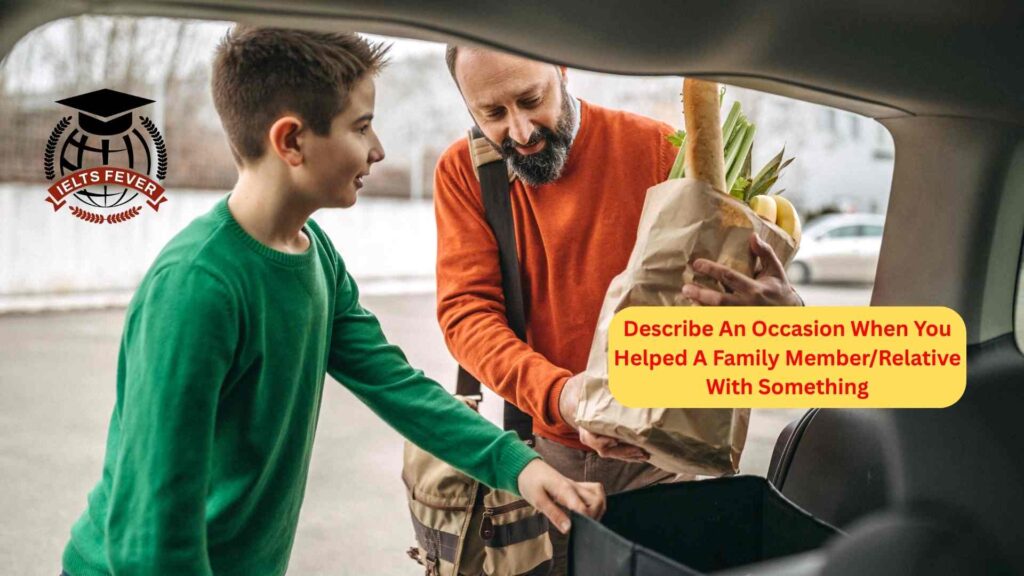
Describe An Occasion When You Helped A Family Member/Relative With Something
- Who did you help?
- What did you help them with?
- How did you help them?
- Why did you help them?
- How did you feel about it?
Sample Answer: Describe An Occasion When You Helped A Family Member/Relative With Something
“I’d like to talk about a time I helped my grandfather navigate the complexities of modern technology. Specifically, I helped him set up and learn how to use his very first smartphone.
My grandfather is in his late seventies. He had always been a technophobe, preferring his old landline and writing letters. However, during the recent lockdowns, he began to feel quite isolated, unable to see his grandchildren. My family decided to buy him a smartphone so he could make video calls, but when he unboxed it, he was completely baffled by the touchscreen interface.
I spent an entire weekend at his house acting as his personal tech tutor. I realised quickly that I couldn’t just do it for him; I had to have the patience of a saint and let him do it himself. First, I adjusted the settings to make the device senior-friendly—I increased the font size and the volume to the maximum. Then I sat with him and created a ‘cheat sheet’—a piece of paper with step-by-step drawings showing how to unlock the phone and open WhatsApp. We practised making video calls repeatedly until he built up the muscle memory to do it without panicking.
I helped him primarily because I hate seeing him feel left out. In our family, he is the patriarch, and it felt wrong that he was the only one disconnected from the family group chat. I wanted him to feel independent and connected, rather than reliant on others to relay his messages.
In the beginning, I must admit it was slightly frustrating because concepts that are second nature to me, like ‘swiping’ or ‘double-tapping,’ were alien to him. However, the moment he successfully made a video call to his brother in Canada and I saw his face light up, it was incredibly rewarding. I felt a deep sense of satisfaction knowing I had given him a tool to combat his loneliness.”
Follow Up Questions: Describe An Occasion When You Helped A Family Member/Relative With Something
1. Why do you think helping family members is important?
I believe it is the cornerstone of a functioning family unit. Helping one another builds trust and reinforces the idea that you have a safety net when things go wrong. In many cultures, there is an unwritten social contract that family comes first; by supporting them, you are maintaining the family’s stability and emotional health. If family members don’t support each other, the relationships can become estranged or superficial.
2. How do you feel when you help someone in your family?
Generally, it gives me a sense of fulfillment. There is a specific kind of altruism involved in helping family because you usually don’t expect anything in return. However, I will be honest—it can sometimes feel burdening if the demands are constant or unreasonable. But ultimately, the feeling of knowing I’ve made a loved one’s life easier outweighs the temporary stress.
3. What are some common ways people help their family members?
It varies depending on the stage of life. For example, parents help children by providing financial stability and education. Conversely, adult children often help their aging parents with logistical tasks, like driving them to medical appointments or managing their finances. Emotional support is another massive factor; simply being a shoulder to cry on during a crisis is perhaps the most common form of help families exchange.
4. Have you ever received help from a family member? How did it impact you?
Yes, definitely. A few years ago, when I was struggling to find a job after university, my older sister allowed me to stay in her apartment rent-free for three months. That financial help was crucial, but the moral support was even more impactful. It gave me the breathing space I needed to focus on my interviews without the crushing anxiety of impending bills. It made me realize how lucky I am to have a supportive support system.
Discover more from IELTS Fever
Subscribe to get the latest posts sent to your email.