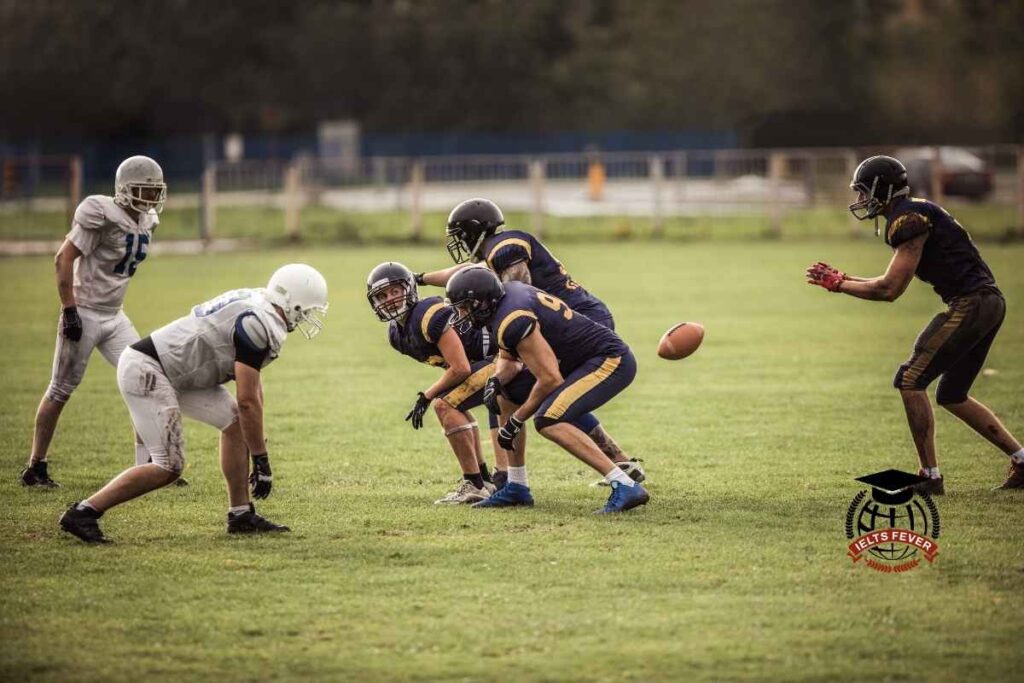
IELTSFever Computer Based Academic Reading Test 9 gives you a full 40-question paper for realistic screen-based practice. This Academic Reading Test 9 moves through sport, industrial invention, and the science of creativity. Therefore, you must follow historical development while keeping people, claims, and results in the correct place.
when you can reserve one uninterrupted hour. Use it as IELTS Academic Computer Reading Practice on a laptop or desktop. Close all answer pages and remove avoidable distractions. Your first score should reflect your present ability, not extra time or outside help.
Start Computer Based Academic Reading Test 9
The opening text is The Beginning of Football Reading Passage. It traces several early ball games and the later development of organised football. Next, History of Plastics IELTS Reading follows materials, inventors, commercial needs, and important improvements. Finally, Does an IQ Test Prove Creativity Reading examines intelligence, personality, mood, brain activity, workplace conditions, and creative thinking.
Although the subjects differ, the passages share one hidden pattern. An event occurs at a particular time. A person, group, game, or organisation owns the action. That action then creates a change, result, belief, or later development.
This article builds a new strategy around that pattern. It does not reveal the answer key. Instead, it teaches you how to identify time, ownership, and change before selecting any response.
Academic Reading Test 9: Verified Paper Structure
Academic Reading Test 9 contains six question groups. Each passage has a different combination, so read every instruction before solving the next block.
| Passage | Questions | Question groups | Main pressure point |
|---|---|---|---|
| The Beginning of Football! | 1–13 | matching headings and matching sentence endings | Following eras, game features, opposition, reform, and standardisation |
| The History of the Invention of Plastics | 14–27 | matching people, True/False/Not Given, and summary completion | Keeping inventors, materials, motives, and later influence separate |
| Does An IQ Test Prove Creativity? | 28–40 | True/False/Not Given, matching people, and summary completion | Linking researchers with opinions, experiments, and findings |
Passage 1 contains 13 questions. Passage 2 has 14, while Passage 3 returns to 13. Consequently, a perfectly equal time split is not always ideal. The second passage may need one additional minute because it combines six possible people with a detailed biographical summary.
You can find more full papers in the IELTSFever Academic Reading test library. The Academic Reading practice archive also collects useful preparation material. However, finish the current test and review your mistakes before opening another paper.
The TAC Method for IELTSFever Computer Based Academic Reading Test 9
Use the TAC Method throughout IELTSFever Computer Based Academic Reading Test 9:
Time → Actor → Change
Time means an era, stage, sequence point, or moment in an experiment. Actor means the person, group, game, material, institution, or study that owns the information. Change means the action, rule, opinion, finding, improvement, effect, or outcome.
| TAC element | Question to ask | Typical evidence |
|---|---|---|
| Time | When, at which stage, or before/after what did this happen? | dates, centuries, sequence markers, earlier or later developments |
| Actor | Who or what performs, believes, creates, supports, or reports it? | names, organisations, games, authorities, researchers, materials |
| Change | What becomes different, and what result follows? | new rules, inventions, uses, conclusions, behaviour, brain response |
The method is simple, yet it prevents several common errors. A familiar date cannot answer a question if the wrong group owns the action. Likewise, the right inventor cannot answer a statement about another material. You need all three TAC points whenever the passage supplies them.
For IELTS Academic Computer Reading Practice, keep a tiny TAC strip on paper. Write no more than four words in each box. For example, your note may look like “later period | schools | common rules” or “experiment stage | participants | activity changes.” These fragments preserve structure without wasting time.
Run a 90-Second Route Scan
Before reading Passage 1 closely, inspect all six question blocks. Mark the two summary instructions and their word limits. Also, notice that Passage 1 starts with headings but finishes with sentence endings.
Next, observe the option lists. The football section uses headings written as Roman numerals. Its second task offers lettered sentence endings. Passage 2 and Passage 3 both contain people-matching lists, but the people and purposes are different.
Now assign three symbols on your note sheet:
- T for chronology or stage;
- A for named owners; and
- C for results, contrasts, or developments.
This scan prepares your attention. Moreover, it reduces the chance of entering a paragraph letter where the screen expects a Roman numeral or selecting a person from the wrong list.
Do not read all three passages during the preview. Your goal is to understand the route, not consume the test before the timer has truly started.
The Beginning of Football Reading Passage: Build an Era Track
The Beginning of Football Reading Passage covers several forms of ball play before focusing on British football. It then moves through disorder, official resistance, educational support, proposed reform, attempts at shared rules, and the separation of two sports.
Create an Era Track instead of writing a conventional summary:
early game → local custom → public problem → educational value → common rules → formal split
The track shows direction without copying details. More importantly, it helps you recognise whether a paragraph describes survival, conflict, improvement, acceptance, or organisation.
Match Headings in The Beginning of Football Reading Passage
Questions 1–7 ask for headings for paragraphs D–J. A heading must capture the paragraph’s controlling job. It should not merely repeat a colourful example.
Read one target paragraph and write a private label of five words or fewer. Then ask:
- Which period or stage is being discussed?
- Who controls the action in this paragraph?
- What important change, problem, or conclusion dominates it?
Suppose a paragraph mentions a game, its popularity, and doubts about its connection with modern football. The heading should reflect the writer’s conclusion, not simply the game’s name. Similarly, a paragraph about attempts to restrict football is not automatically about success. Check the result of those attempts.
Use a heading duel when two choices appear possible. Place the two headings beside your TAC note. Eliminate the option that fails one element. One heading may fit the actor but miss the outcome. Another may describe the change accurately but belong to a different stage.
Opening and closing sentences deserve special attention. The first often introduces the stage, while the last reveals the paragraph’s verdict. Nevertheless, read the middle when examples or contrast words redirect the meaning.
Finally, check that you have entered Roman numerals, not paragraph letters. This mechanical detail can cost marks even when your comprehension is correct.
Join Sentence Stems with the Correct Endings
Questions 8–13 ask you to complete each sentence with an ending from a shared list. Treat every stem as a contract. The selected ending must satisfy grammar, meaning, and historical ownership.
First, read the stem alone. Identify whether it names an early game, a period of British football, public authorities, or academic acceptance. That named subject becomes the Actor in TAC.
Second, predict the type of change. Did the activity form part of an event? Were the players cooperating? Perhaps individual participants had separate roles. Alternatively, officials may have objected for a stated reason, or schools may have encouraged the game.
Third, scan the relevant evidence zone before studying every option again. This order protects you from attractive endings that sound generally true but belong to another subject.
Use the following connection test:
| Check | Question |
|---|---|
| Grammar | Does the ending create a complete and natural sentence? |
| Ownership | Does the stated game, authority, or institution own this detail? |
| Historical fit | Does the feature belong to the correct period? |
| Meaning | Does the passage express the same relationship? |
Cross out an ending only after you can connect it confidently to a different stem or prove that it conflicts with the text. In addition, remember that grammatical fit alone is weak evidence. Several options may complete the sentence correctly while only one matches the passage.
History of Plastics IELTS Reading: Follow the Invention Relay
History of Plastics IELTS Reading presents development as a relay. One discovery creates a starting point. A later inventor modifies, combines, purchases, or applies an earlier idea. Eventually, a material gains new uses or commercial importance.
Use an Invention Relay with four fields:
person → input or motive → invention/action → later effect
Keep each entry short. You may note “inventor | earlier material | new version | wider use” or “buyer | purchased process | business benefit.” The pattern matters more than memorising every product.
The passage also moves between natural materials, artificial polymers, market needs, industrial backgrounds, experiments, patents, and present-day uses. Therefore, always confirm whether a sentence describes the general field or one inventor’s biography.
Match Inventors in History of Plastics IELTS Reading
Questions 14–18 connect an opinion or action with the correct inventor, chemist, or company. Begin by giving every option a role badge. A role badge might say early breakthrough, laboratory funding, reward-driven substitute, purchased process, or foundation for later work.
Do not write complete notes beside all six names. Instead, capture one distinctive action. This gives you a fast ownership index when the questions paraphrase the same event.
Money creates several possible traps. One person may receive funds, another may spend money on a process, and a third may respond to a prize. Those events share financial language but have different actors and outcomes.
Similarly, influence can move through several stages. An unsuccessful early material may still support a later success. The creator of the first version is not necessarily the person who commercialises or improves it.
For each match, say the full relay silently: “This actor had this motive, performed this action, and produced this later effect.” If one link is missing, keep searching.
Decide True, False, or Not Given from Claim Strength
Questions 19–22 test agreement with the passage. Build a Claim Scale before choosing a verdict:
exactly stated | clearly contradicted | not settled
True requires full agreement. False requires evidence for the opposite. Not Given means the text leaves the relationship unresolved.
Watch quantifiers and finality. Words such as most, completely, always, and only can make a statement stronger than the passage. A material may become less common without disappearing. A researcher may need awareness of market demand without facing a conflict with it.
Also, separate category membership from identical properties. If several materials belong to one chemical family, that does not mean every feature is the same. Read exactly what the statement claims they share.
When a sentence contains two factual parts, verify both. One correct half cannot rescue an unsupported half. Therefore, place a small slash between the parts and test them separately.
Do not choose Not Given simply because you missed the evidence on the first scan. Search once by the rare noun and once by the relationship. After that, decide whether the passage truly settles the statement.
Complete the Biography Summary in Exact Words
Questions 23–27 form a summary about one inventor’s early environment, work, development, patents, and material. The answers allow no more than three words from the passage.
Use the Biography Corridor:
background → first work → skill development → patent activity → material composition
The order guides you through a concentrated area of the passage. Read the complete summary first, then locate the paragraph where this life sequence begins.
Predict the grammar of each gap. A phrase after surrounded by may name an activity or environment. A phrase after in a needs a place. Another blank may require a personal quality, two material categories, or a chemical combination.
Next, copy the exact words. Do not modernise spelling or replace a phrase with a synonym. Count hyphenated or joined forms exactly as they appear on the test screen.
Before moving on, apply the GML check:
- G — Grammar: the completed sentence reads correctly;
- M — Meaning: the phrase matches the biographical stage; and
- L — Limit: the answer uses no more than three words.
Because all five gaps follow one life story, an answer from another inventor’s paragraph should immediately look suspicious.
Does an IQ Test Prove Creativity Reading: Create a Claim Laboratory
Does an IQ Test Prove Creativity Reading explores a difficult question through several perspectives. It considers intelligence, personality, mood, mental filtering, brain patterns, social relationships, workplace conditions, and the ability to practise creative thought.
Treat the passage as a Claim Laboratory. Every important idea needs three labels:
researcher or study → proposed mechanism → finding or implication
Some paragraphs report a correlation. Others suggest a mechanism, describe an experiment, or offer a broader interpretation. These roles are not interchangeable. A link between two factors does not automatically prove that one causes the other.
Test Statements in Does an IQ Test Prove Creativity Reading
Questions 28–31 use True, False, or Not Given. Start by isolating the logical core of each statement. Then underline words that control its strength.
A necessary condition is not always sufficient. For example, the passage may require a certain ability without saying that more of it guarantees better performance. This distinction often separates True from False.
Next, check whether the statement introduces an outside comparison. If the text discusses one ability but never ranks it above every other skill, the claim may remain unproven. Do not create a comparison from general knowledge.
For claims about personality or health, avoid universal conclusions. A study can report higher likelihood without saying that every creative person shares the condition. Likewise, related cognitive features do not make one condition compulsory.
Use a proof sentence before clicking: “The passage states ___, while the question claims ___.” The contrast between those two versions usually exposes an altered degree, missing comparison, or direct agreement.
Match Researchers with Their Creative Claims
Questions 32–36 ask you to link opinions or actions with six people. Build a Viewpoint Card for each name:
| Card field | Note to capture |
|---|---|
| Topic | mood, mental states, relationships, workplace climate, or practice |
| Claim type | observation, explanation, experiment, or recommendation |
| Direction | improves, triggers, supports, switches, or trains creativity |
Reporting verbs matter. One person may suggest a trigger, another may find a workplace relationship, and another may demonstrate improvement through an exercise. The verb shows how strong the claim is and who owns it.
Be careful when one paragraph contains several names. The paragraph’s topic does not belong automatically to its first person. Trace pronouns, quotations, and reporting verbs until the correct owner is clear.
Then compress each question into a two-part cue, such as “mood shift—trigger,” “trust—support,” or “practice—improvement.” Match the cue with the Viewpoint Card, and return to the original lines for confirmation.
Finally, do not assume that options can be used only once unless the printed instruction says so. Base elimination on the actual rule, not habit from another test.
Reconstruct the Experiment Summary
Questions 37–40 complete a summary of a brain-activity experiment. The limit is no more than three words from the passage for each answer.
Draw a four-step Experiment Reel:
equipment → two stages → measured change → creative result
First, locate the paragraph containing the named researcher or experiment. Then read it from beginning to end. The questions follow the experiment’s sequence, so random scanning is unnecessary.
Predict what each gap needs. The opening blank may require equipment. Next could come the names of stages. A later gap may describe a measured pattern, while the final one may express a comparison between stages.
Scientific phrases often contain modifiers that matter. However, never add a word merely because it sounds technical. Copy only the phrase supported by the text and allowed by the three-word rule.
After completing the reel, check the internal logic. Equipment records a measure. The measure changes between stages. That difference then relates to the quality of an output. If your four answers do not form that chain, revisit the paragraph.
A Five-Stop Clock for IELTS Academic Computer Reading Practice
Use this timing model for IELTS Academic Computer Reading Practice:
| Clock | Stop | Goal |
|---|---|---|
| 0:00–1:30 | Route scan | Mark formats, word limits, and option lists |
| 1:30–19:00 | Football passage | Resolve headings before sentence endings |
| 19:00–40:00 | Plastics passage | Protect time for matching and five summary gaps |
| 40:00–56:30 | Creativity passage | Link researchers before completing the experiment reel |
| 56:30–60:00 | Exit audit | Fix blanks, format errors, spelling, and selected flags |
The football passage receives slightly less time because both groups use supplied options. Passage 2 receives the largest block. Passage 3 keeps enough time for careful attribution and an exact-word summary.
Use a 75-second ceiling for a stubborn item. If the evidence remains unclear, select the best-supported option, add a small flag, and move forward. Returning later with a fresh view is usually more productive than rereading the same lines immediately.
During the exit audit, inspect objective risks first. A blank answer, wrong numeral style, or four-word response is easier to repair than a subtle interpretation. Only then should you revisit logic-based flags.
Use Three Confidence Codes on the Screen
Assign one code after answering each difficult item:
- P — Proven: one passage line or relationship clearly settles the answer;
- N — Narrowed: two options became one through elimination; and
- R — Return: evidence remains incomplete or two choices still survive.
Do not revisit every N answer. Many correct responses come from sound elimination. Return first to R items, especially when you know the relevant paragraph.
If an answer is marked P, change it only when new evidence directly contradicts the original proof. Nervousness is not new evidence.
This coding system keeps review selective. It also reveals whether your weakness is locating information or trusting a proven decision.
Digital Reading Habits That Protect Accuracy
Keep the question stem visible while reading its evidence. This reduces memory errors, especially in sentence-ending and matching tasks.
Scroll by paragraph rather than by random small movements. When you reach a likely section, place its first line near the top of the pane. You can then read the full argument without losing the question.
Highlight paired information. Mark a name with its action, a date with its development, or a condition with its outcome. Isolated highlighting rarely helps later.
For headings, avoid colouring every example. Instead, note the paragraph’s direction in two or three words. For summaries, highlight only the exact phrase you intend to type.
Practise these habits in the IELTSFever CBT practice centre. Regular IELTS Academic Computer Reading Practice turns navigation into a routine rather than a distraction.
Paraphrase Signals in Academic Reading Test 9
Academic Reading Test 9 frequently replaces concrete passage language with a shorter academic description. Train yourself to search for meaning bundles rather than isolated synonyms.
Common shifts may include:
- efforts to control an activity becoming official restriction;
- benefits for character becoming moral development;
- making shared rules becoming standardisation;
- one discovery supporting another becoming later influence;
- money offered for a solution becoming financial motivation;
- several possible ideas becoming divergent thinking; and
- trust between people becoming supportive relationships.
These are strategy examples, not a list of answers. Use each pair to notice the relationship being paraphrased.
When a question uses an abstract noun, look for verbs in the passage. Standardisation may appear through verbs such as agreeing, establishing, or governing. Conversely, a question verb may compress a noun phrase from the passage.
After finding a likely synonym, read the complete clause. Topic similarity proves location, but only the full relationship proves the answer.
High-Risk Mistakes in IELTSFever Computer Based Academic Reading Test 9
Matching a Heading to a Historical Name
A heading describes a paragraph’s function. The presence of an ancient game or famous institution does not identify the main idea by itself.
Using Grammar as the Only Sentence-Ending Test
Several endings may sound correct after a stem. Check the actor and historical detail before choosing a letter.
Mixing the Buyer, Seller, and Inventor
In History of Plastics IELTS Reading, money and influence pass between several people. Record who pays, who receives, who invents, and who benefits.
Turning a Correlation into a Cause
In Does an IQ Test Prove Creativity Reading, a relationship between two features may not establish direct causation. Preserve the writer’s level of certainty.
Ignoring the Three-Word Limit
Both summary groups allow no more than three words. Count each response before leaving the passage.
Treating a Necessary Factor as a Guarantee
Something can support creativity without producing it automatically. Watch words such as necessary, sufficient, may, and guarantees.
Reviewing Proven Answers Without New Evidence
Repeated checking consumes time and can replace a correct answer with a weaker option. Reopen only responses marked R or those with a format risk.
Diagnose Errors with a TAC Scorecard
After the timed attempt, open the IELTSFever Test 9 solution page. Review one question at a time and mark the first point where your reasoning failed.
| Scorecard column | Diagnostic question |
|---|---|
| Time | Did I attach the detail to the wrong era, stage, or sequence point? |
| Actor | Did I assign the action or opinion to the wrong owner? |
| Change | Did I miss the result, contrast, degree, or later effect? |
| Format | Did I enter the wrong symbol, spelling, or number of words? |
Avoid labels such as “silly mistake.” They do not tell you what to change. Write a precise cause, such as “matched the product but ignored who purchased the process” or “saw a shared keyword but missed the stronger claim.”
Next, hide the official answer and solve the item again. State the TAC chain aloud. If you cannot name the actor and change, your correction is not complete.
After reviewing all 40 questions, use the IELTSFever band score calculator. Record your raw result, estimated band, most common TAC failure, and the question type that consumed the most time.
A Five-Day Repair Plan
Day 1: Full Test and Scorecard
Complete Academic Reading Test 9 under a strict 60-minute timer. Build a TAC Scorecard for every error and every unsupported guess.
Day 2: Heading Compression
Return to the football passage. Summarise paragraphs D–J in five words each, then match the headings again without looking at your earlier choices.
Day 3: Ownership Drill
Create role badges for the inventors and creativity researchers. Cover the passage, read each question cue, and identify the likely owner. Afterwards, verify every choice from the text.
Day 4: Logic and Limits
Redo both True/False/Not Given groups. Then complete both summaries while counting words aloud. Note whether logic or answer format causes more losses.
Day 5: Twelve-Minute Retest
Attempt only your original R items and wrong answers. Allow twelve minutes in total. Every new response must have a clear Time, Actor, and Change chain.
Keep your wider study balanced as well. Use the Academic Writing Task 1 section for concise reporting practice. In addition, the IELTS Listening sample tests can strengthen accurate answer entry.
Exit Audit for IELTS Academic Computer Reading Practice
Before you submit IELTS Academic Computer Reading Practice, run this final audit:
- All 40 answer boxes contain a response.
- Questions 1–7 use Roman numerals in the required format.
- Sentence endings belong to the named game, period, or institution.
- Inventor matches preserve the correct owner, motive, action, and result.
- True/False/Not Given choices follow the passage rather than outside knowledge.
- Strong words such as all, completely, and guarantees have been checked.
- Questions 23–27 contain no more than three words each.
- Researcher opinions remain attached to the correct speaker.
- Questions 37–40 contain no more than three words each.
- Copied scientific terms match the passage spelling.
- No answer was changed only because of last-minute doubt.
- Every remaining flag has received one final evidence check.
Submit when the clock reaches 60 minutes. An honest result tells you what to train next. Extra time may improve the score, but it weakens the diagnosis.
Frequently Asked Questions About Academic Reading Test 9
Question 1:- How many questions are in Academic Reading Test 9?
Academic Reading Test 9 contains 40 questions divided across three passages. You should finish all questions and the final audit within 60 minutes.
Question 2:- What makes The Beginning of Football Reading Passage challenging?
The Beginning of Football Reading Passage moves through many periods and game forms. An Era Track helps you separate survival, disorder, opposition, reform, shared rules, and later division.
Question 3:- How should I organise History of Plastics IELTS Reading?
For History of Plastics IELTS Reading, use an Invention Relay. Connect each person with a motive or input, a specific action, and a later effect.
Question 4:- What should I track in Does an IQ Test Prove Creativity Reading?
In Does an IQ Test Prove Creativity Reading, track the researcher, proposed mechanism, and finding. Also, separate correlations from causes and necessary factors from guarantees.
Question 5:- What answer limit applies to the summaries?
Questions 23–27 and 37–40 allow no more than three words from the relevant passage for each answer.
Question 6:- Should I read all heading options before the paragraph?
Skim the list once, but summarise the target paragraph before making a choice. This reduces the influence of repeated keywords.
Question 7:- When should I view the solution page?
Open it only after completing the full timed test. Otherwise, your score will not measure independent reading accurately.
Question 8:- How often should I complete IELTS Academic Computer Reading Practice?
Schedule a complete computer reading paper every seven days, provided you review it deeply. Use short TAC drills between full attempts.
Start IELTSFever Computer Based Academic Reading Test 9
You are ready for IELTSFever Computer Based Academic Reading Test 9. Track the stage, identify the owner, and prove the change before entering a response. The TAC Method will keep historical events, inventions, and creative claims in separate lanes.
Begin Academic Reading Test 9 now. Protect the full hour, mark uncertain items selectively, and complete the TAC Scorecard after checking your result.
Stay connected through the official IELTSFever social profiles:
Discover more from IELTS Fever
Subscribe to get the latest posts sent to your email.