


The Diagram Shows the Stages in The Cultivation and Management of A Forest. Summarise the Information by Selecting and Reporting the Main Features, and Comparisons Where Relevant.
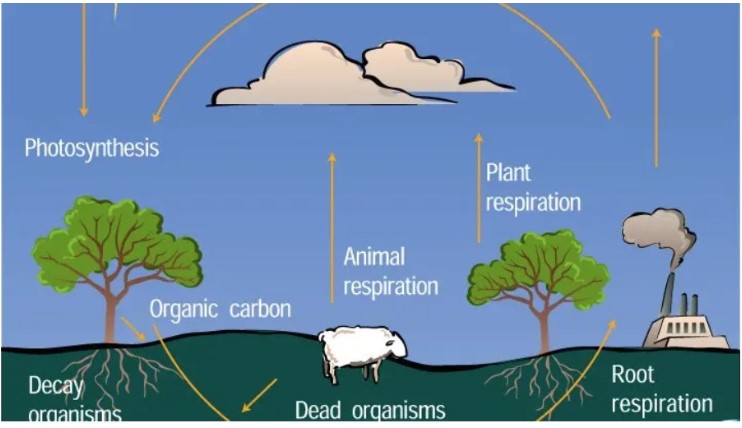
The diagram illustrates the different stages of the carbon cycle in the environment, showing how carbon is exchanged between plants, animals, soil, and the atmosphere.
Overall, it is clear that carbon circulates continuously through a series of natural processes such as photosynthesis, respiration, and decomposition, with both living organisms and human activities playing vital roles in maintaining this cycle.
To begin with, carbon dioxide in the atmosphere is absorbed by plants through photosynthesis, enabling them to produce organic carbon. This carbon is then transferred to animals when they consume plants, and later returned to the atmosphere via animal respiration. Similarly, plants themselves release carbon dioxide during plant respiration, further contributing to atmospheric carbon.
When plants and animals die, their remains contribute to dead organic matter in the soil. This organic carbon undergoes decomposition by microorganisms, releasing carbon back into the environment. Additionally, root respiration is another process by which plants contribute to the emission of carbon dioxide into the air.
Apart from natural processes, human activities such as industrial emissions also release significant amounts of carbon into the atmosphere, reinforcing the cycle.
In summary, the carbon cycle is a complex but balanced process involving interactions between plants, animals, soil, and human activity. It demonstrates how carbon continuously moves through different forms, ensuring the sustainability of ecosystems.