The Line Graphs Below Show the Production and Demand for Steel in Million Tonnes and The Number of Workers Employed in The Steel Industry in The Uk in 2010. Summarize the Information by Selecting and Reporting the Main Features, and Make Comparisons Where Relevant.
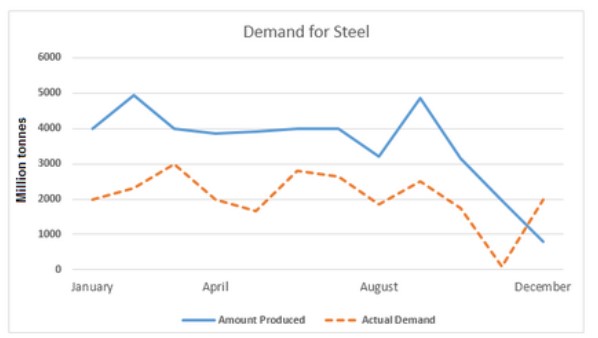
The given line graphs illustrate the production and demand for steel in the UK in 2010, measured in million tonnes, along with the number of workers employed in the steel industry during the same period.
Overall, it is clear that steel production consistently exceeded demand throughout the year, despite noticeable fluctuations. Additionally, employment in the steel sector steadily declined, reaching its lowest point by the end of the year.
During the first quarter, steel production rose sharply from around 4,000 million tonnes in January to a peak of 5,000 million tonnes in March. In contrast, demand increased only gradually, reaching roughly 2,500 million tonnes by March. From April to August, production stabilised at around 4,000 million tonnes, before dropping significantly to just over 1,000 million tonnes by December. Meanwhile, demand followed a gentler pattern, fluctuating between 1,500 and 2,800 million tonnes for most of the year, before falling dramatically to zero in November and then recovering to about 2,000 million tonnes in December.
The second graph shows a continuous decline in workforce numbers. Employment fell sharply from around 5,000 workers in January to approximately 3,000 in April. This downward trend continued more gradually over the following months, reaching roughly 1,000 workers by December.
In summary, while steel production remained higher than demand, it experienced significant volatility throughout the year. At the same time, the UK steel industry saw a substantial reduction in employment, suggesting a potential shift toward automation or weakening market conditions.
Discover more from IELTS Fever
Subscribe to get the latest posts sent to your email.