 Sample 1: The Diagram Below Shows the Typical Stages of Consumer Goods Manufacturing
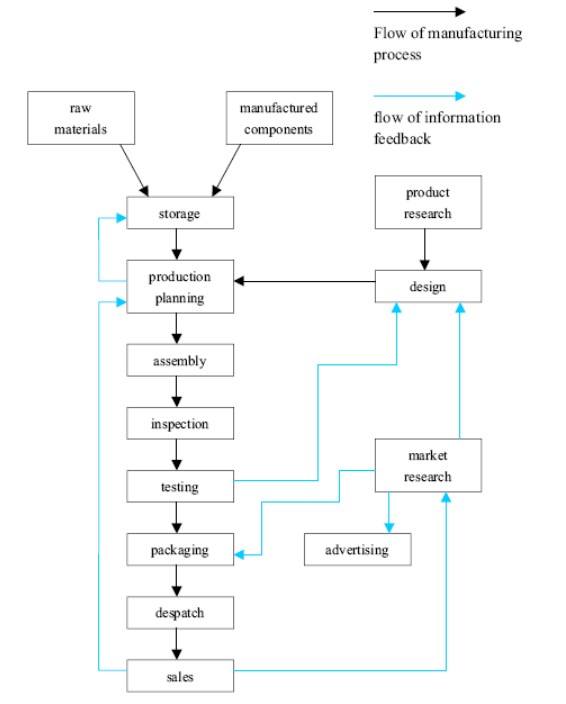
The diagram illustrates the typical stages involved in the manufacturing of consumer goods, along with the information feedback process that allows adjustments at different stages of production. Overall, the process involves a continuous cycle of production, quality control, and feedback, beginning with raw materials and components and ending with sales, supported by research and advertising functions.
At the start, raw materials and manufactured components are collected and stored. These materials then move to the production planning stage, where manufacturing schedules are organised. Following this, the goods go through assembly, after which they are carefully inspected to ensure quality standards are met.
Once the inspection is complete, the products undergo testing to verify performance and reliability. If successful, the tested goods are packaged, dispatched, and eventually reach the sales stage, where they are made available to consumers.
Meanwhile, a feedback loop (represented by blue arrows) continuously provides information to improve the process. Data from sales and market research are sent back to advertising, design, and production planning. These stages play a crucial role in aligning product design and the manufacturing process with consumer preferences and market trends. Additionally, product research supports innovation and improvement by feeding insights into the design phase.
In summary, the diagram demonstrates a complex yet well-organised process in which manufacturing and information flow operate together. The system ensures that consumer feedback and market research continuously refine both the product quality and production efficiency, leading to better customer satisfaction and improved sales performance.
Discover more from IELTS Fever
Subscribe to get the latest posts sent to your email.